Campaign report: Rime of the Frostmaiden: session #3

It’s always been hard to travel between the Ten Towns – the bitter cold and the harsh landscape testing the hardiest of adventurers. Lately though, with Auril’s chill magic shrouding the land, it’s deadly. The ferry routes from Easthaven to Caer-Konig and Caer-Dineval have long ceded to the frozen lake. Dogsleds overland are the only way to make passage across the tundra.

Three adventurers gather in the Northlook tavern in Bryn Shander, each waiting for a guide to take them north to Caer-Konig. It’s a seven hour journey overland – too much for a single leg. They’ve arranged a rest stop in Caer-Dineval, a little over four hours away.

Lucas, a red-skinned teifling warlock, is juggling a number of leads, all pointing north. A missing youth from Targos who left the town suddenly in the company of teiflings heading for a castle somewhere. Caer-Dineval maybe. A dog, Boy, now his loyal companion, searching for his master thought lost in an expedition to Kelvin’s Cairn. And, rumours of an abandoned wizard’s tower and a guide who can take a party there from Caer-Konig.

Eifira Galaran, a barbarian elf, seeking only to get to the furthest place away. Away from what? Just away.

And Veomileana, a short-statured Goliath wizard, with a secret agenda. Perhaps he too searches for the tower. Perhaps not.

Their guide arrives, Nebmara, from Farfrozen Adventures. Their dogs are fed and waiting and they encourage the party to leave rightways. “We should easily make Dineval by night-fall. If we don’t run into trouble…”

Two hours into the journey and all is quiet. Veomileana and Nebmara handling the cold as if they were born to it. The elf, Elfira, clearly suffering the effects of exhaustion. She’ll be fine holding that great axe of hers, but she’s slow to move and clumsy with the cold.

Something on the road ahead. Keen eyes pick out a large white cat and two smaller ones, not kittens but not yet fully grown. They’re feeding on another animal – carrion or prey, no-one can tell. Circle of life. They’ve not seen the party.

“The dogs won’t be able to take the sled overland – we need to clear this road.” Neb isn’t phased which gives everyone confidence. Eifira strolls forward, no attempt at silence, readying that great axe for the fight. The cats hiss and bridle, showing sharp claws and even sharper teeth.

It’s over quickly. Eifira, consumed by the anger that barbarians have learned to channel, dispatching the mother and one of the cubs. Veomileana stays on the sidelines firing bonfires towards the cat and sending his familar, a small owl, in again and again to distract the cats. Lucas is pounced on by the smaller of the cats but shields the attack with a flash of magic. Nebmara stays back at the sled, causing any creature that comes near the dogs to flee with dissonant magic whispers in their heads. Occasionally Neb shouts encouragement to the others – lacing their words with a sliver of bardic magic.

In the frozen north, nothing is wasted. The cats’ bodies will provide for other animals here, the adventurers take the pelts. Prized for their thickness, they’ll do to keep someone warm in this arctic hell.

They’re an hour or so from Caer-Dineval, their first stop, when the small lantern Lucas has strapped to his belt starts glowing. It was given to him by an academic in Targos who’s hunting for the mythical Chingwa spirits of the north. It glows when they are near. Persuading the party to stop, he fashions a quick pull-trap from a box, stick and string and puts it on the road ahead. Cutlery that he ‘borrowed’ from an inn set inside as bait. The party wait, and wait. The elf again feeling the effects of the cold. “Enough” says the Goliath, “I’m going to send my owl up to search for these creatures. We can’t wait here forever”.

The owl circles, spotting some odd stones to the North East. The party heads to investigate. “Not a good idea,” says Nebmara “I’m staying with the dogs.” They search, the cold wracking their bodies, but nothing. Returning to the sled they set off again towards Caer-Dineval, what passes for night now approaching and the temperature dropping fast. As they pass the trap, keen eyes notice that the cutlery is gone and there are what could be tiny footprints around it.

The tower of Caer-Dineval in sight, a bloodcurdling howl comes from the tundra and then another. Two terrifying creatures break forth – these are the fables yetis that the Reghed talk of. There’s no way they can fight these, not in their exhausted state. “Faster, faster,” says Nebmara, urging the dogsled forward – the last push before the town walls. It’s a bumpy ride, everyone hanging on for dear life. Neb loses their grip. They’re thrown from the sled towards the terrifying, charging beasts.

Suddenly, their familiar, a large orange owl is there. Catching them in a practiced manner and lifting them high out of the yeti’s grasp. The yetis turn to follow the flying creature. “Keep the dogs” Neb shouts to the adventurers “they weren’t mine anyway.” As they are carried away, chased by the terrors of the snow, keen eyes would see their whole appearance change as some kind of magic gets dispelled. Who was this person? Were they even the guide we were expecting?

Three exhausted adventurers arrive finally at the gates of Caer-Dineval. The frozen lake below them, the old castle high on the bluff ahead. It’s always been hard to travel between the Ten Towns.

Character Quirks for easier roleplay

In the past, I’ve encouraged players to spend time on their backstories, but now I ask them to simply come up with some character quirks that they can use to make their character come to life. Let me explain how I do it and why.

I think I’ve always struggled with detailed backstories. They ask too much of a player. It’s hard to project a whole detailed backstory into what’s happening at the moment. Same goes for long lifestyle questionnaires about characters – ‘what’s your character’s favourite drink colour?’. I never know what to do with them.

I should say that some people find that backstories work really well for them, and they enjoy working on them, and that’s awsome. But they’re not for me.

For me, your character is not a backstory, or even a character sheet, it’s what gets shown to other people round the table, through your actions and reactions at the table, usually over many sessions.

So, I like a very short backstory – a couple of sentences that just describe how my character plausibly got to the start of this adventure. Just enough that I can answer consistently if another character asks. I’ll fill in bits of my past as I think about them during the campaign.

What I do like though are quirks. These don’t have to be funny or extreme . If they are, they can wear out their welcome very quickly. Instead, there are two types I try to build into my characters: habitual quirks and motivating quirks.

Find some small habit that your character has. Maybe the barbarian is always cleaning her axe with boiled linseed oil. Or sharpening it with a whetstone. Maybe your fighter always puts their sword back in its sheath and closes it up with a snap. Maybe your wizard always picks up spell components from the ground. Maybe, the cleric keeps a diary. Maybe… well, you get the picture. An action that your character takes regularly, that crucially, other characters can see. and react to.

This serves a few purposes. You always have something to do when you can’t think of anything else to do. That’s not nothing! It keeps the atmosphere alive and the group in-character. I am always surprised how much this adds.

The magic is that, over time, a habitual quirk will take on more meaning. What starts off as ‘always fiddling with her glasses’ becomes ‘always fiddling with her glasses when scared’. And to complete the circle, once this has happened you can signal you’re scared by fiddling with your glasses. It really works.

Don’t worry if your quirk ia a bit boring. In the midst of action, doing something boring can be a dramatic choice. Think of Qui-Gon in the Phantom Menace turning off his light-saber and meditating during the fight with Maul.

The second type of quirk I like is one that gives you a reason to act – lets call these motivating quirks. It’s important that these quirk prompt you to do something. “Afraid of the dark” is a fine quirk, but it doesn’t motivate action directly. “Always lights a torch when entering a dark place” or “Will only enter dark place holding the hand of someone with darkvision” are much better. Let’s do another one: “Hates boats”. Not necessarily motivating. “Always tries to convince the party to avoid boat trips”, “Always closes eyes and rocks back and forth when on the water”. Motivating.

These are similar to the bonds and ideals in the 5e rules. But I find they’re way too general as written to be helpful for new roleplayers and new characters. “Everything I do is for the common people” is unmotivating. “I give any treasure I make to the village orphan and foundlings fund. If I get a chance to steal from a noble, I take it” would be much more motivating.

When I’m making a character, I like to give them a couple of habitual quirks and four or five motivating ones. After a few sessions of playing I usually know if these are working and whether I should drop or swap some out.

Try it, it might work for you.

How I use Avrae

Avrae is a very capable D&D discord bot made by DnDBeyond. It’s complicated. In the spirit of ‘complex tools, used simply’ I want to share how I use it when I’m GMing a game.

I have a go-to set of 10 or so commands that I can remember and that I use. I’ve tried to use more of it in the past but my brain has been full for a long time and I can’t pick up these tools like I used to. As always, you may conclude differently. This is what I do, not what I think you should do.

Setting up Avrae

Most of the time, if you’re playing with me, you won’t know that I’m using Avrae. I have a separate channel in discord that I use to talk to the bot. This has a couple of useful side-effects – I can use it to look up stuff and make rolls without the players seeing and I get a convenient history in that channel of all the avrae commands I’ve used in the game.

I’ve tried introducing avrae to players by having it available out in our #gameplay channel but I’ve found that even if you’re playing with someone who can make it sing like a stradivarius, you’ll still get a lot of autogenerated noise, especially when mistakes are made. And I’ve found that at least one player will be sat there wondering what the hell is going on.

I have avrae connected to my DnDBeyond account – I’m guessing I did this by following the invite process on their site but it’s so long ago I don’t really remember.

Importing characters

Before every game, I update avrae:

!update

And then I import any new characters using the URL of their character id:

!import  https://www.dndbeyond.com/characters/[character_id]

Creating character tokens

!char list

will give you a list of available characters

!char [name]

will let you switch the current character that commands in avrae run against. I usually just use a the first few letters of a character’s name to run this command. If it’s ambiguous, avrae’ll give you a list of characters to choose from.

!token -border none

will give you a nice round token for the character with no branding. I use owlbear rodeo and can usually just drag that token into the game.

!portrait
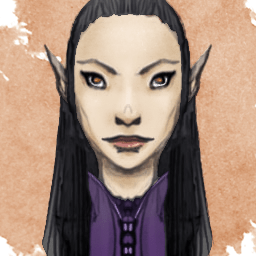
Calista Brelladora

this will give you a square portrait if you want to stamp the token in a different way.

Creating monster tokens

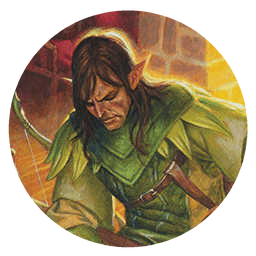
I have two ways that I use to make monster tokens. You can create a nice round token – but unfortunately you can’t remove the DnDBeyond branding . I guarantee one of your players will ask what that big ‘B’ is for.

!token [monster name]
Goblin

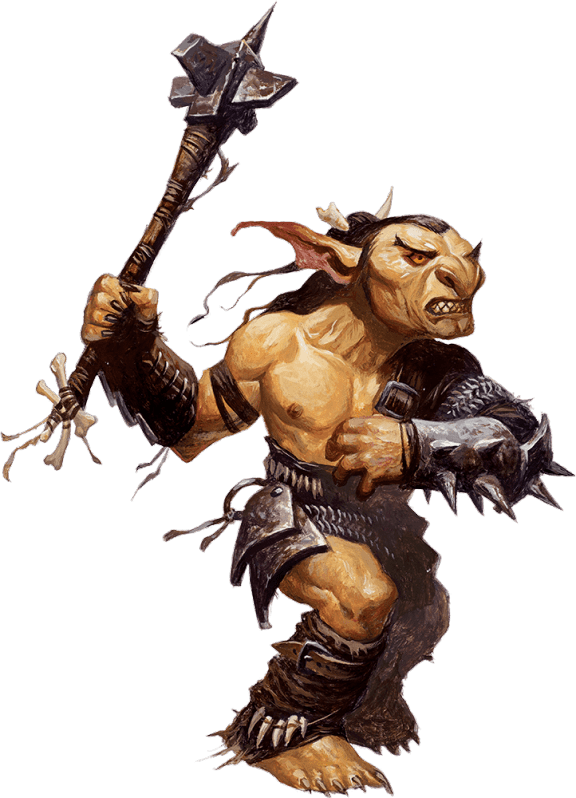
Or you can get the image for a monster:

!monimage [monster name]
Goblin

I tend to use the round tokens if I’m on a navigation map – say a map of a village or of an area. The full images I use on combat maps.

Making rolls

The dice syntax is really powerful. I don’t use it – I just use it for simple rolls. Again, my brain is full and I worry that if I learned the whole dice syntax I’d have to forsake some other knowledge that might be more useful. For simple rolls like this, it avoids having to do maths:

!roll 2d20+4

Making random names

This is really useful when you’ve invented an NPC and someone asks for their name. Do not hesitate when asked, run this and then say the name as if you had it all along.

!randname [optional race]

Getting rules and stats information

There are plenty of lookup commands that bring back 5e rules and other information. These are the ones I tend to use. Especially the condition rules for some reason.

!monster goblin
!condition grappled
!spell mage hand

Er… that’s it

And those are all the commands I use. I know it’s a much richer tool – there are more commands and the commands I’ve shown here have more options. But this is what I do. I find them very powerful on their own and also empowering. You might find the same.

One last thing, Avrae encourages you to type !help. Do not be scared if you do this – so much stuff appears and it’s really difficult to know where to start. When you’re comfortable running a few commands and using the basics in-game, then you can look into the abyss run the help command safely.